Find Waterproof Noise Cancelling Wired Earphones for DJ, Aviation, Call Center
Source 30 Waterproof Noise Cancelling Wired Earphones with Bluetooth, USB, and multimedia features for mobile phones, computers, and call centers. Compare specifications including 40mm and 10mm drivers, 8-hour playtime, and Class A or B distance versions from Chinese manufacturers.
Key considerations
Products List



New Earbuds-Free Wireless Waterproof Noise-Cancelling Open-Ear Headphones
$5.46 - $6.11
MOQ: 200 Pieces


Wireless Headphones Bluetooth in-Ear Headphone Noise Canceling Earphones
$7.10 - $7.30
MOQ: 100 Pieces

Factory Wholesale Wireless Bluetooth Earbud Noise Cancelling Wireless Earphone
$5.00 - $5.50
MOQ: 100 Pieces


Promotional Hot Sale Stereo Sound Noise Cancelling Multifunctional Wired Headset
$17.11 - $17.13
MOQ: 100 Pieces


Comprehensive Sourcing Guide
Strategic Sourcing Guide for Waterproof Noise Cancelling Wired Earphones
The procurement landscape for audio equipment has evolved significantly, with buyers increasingly seeking specialized solutions that combine durability with advanced acoustic performance. When researching the core keyword "Waterproof Noise Cancelling Wired Earphones," it is essential to distinguish between the specific attributes of wired connectivity and the functional requirements of noise cancellation. While the market often conflates wireless and wired technologies, a wired approach offers distinct advantages in signal integrity and power management. This guide provides a disciplined framework for evaluating suppliers, verifying technical claims, and managing the procurement lifecycle for these specialized audio components.
Technical Specifications and Functional Architecture
Understanding the technical architecture is the first step in defining a precise procurement requirement. In the context of wired audio, the "wired" designation implies a physical connection, typically via a 3.5mm jack or a USB-C interface, which eliminates the latency and battery dependency associated with Bluetooth transmission. However, the term "noise cancelling" in a wired context requires careful scrutiny. Active Noise Cancellation (ANC) typically requires a power source, which can be problematic in a purely passive wired setup unless the cable includes an inline controller with a battery or draws power from the source device.
Buyers must verify the driver unit specifications, as this is the primary determinant of sound quality. Market observations indicate driver units ranging from 10mm to 40mm, with larger drivers often associated with deeper bass response and higher sensitivity. For instance, a 40mm driver unit is often cited for delivering robust audio output, while a 10mm unit is common in compact in-ear designs. The frequency response range is another critical metric; a standard high-fidelity range of 20Hz to 20kHz is expected, but buyers should confirm if the specific model extends beyond this or offers a tailored response for specific applications like call centers or DJ monitoring.
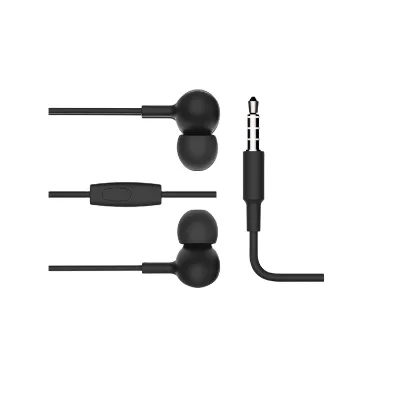
The distinction between "wired" and "wireless" models is paramount. Some product listings may feature mixed attributes, such as Bluetooth capabilities alongside wired functions. A buyer seeking a purely wired solution must ensure the product does not rely on a Class A or Class B radio distance version, which indicates wireless capability. Instead, the focus should be on cable length, typically observed at 1.2 meters, and the robustness of the connector. Additionally, the "waterproof" claim must be validated against specific ingress protection ratings, as general water resistance does not equate to submersion capability.
Compliance, Certification, and Safety Standards
In the B2B sector, compliance is not merely a formality but a prerequisite for market entry and liability protection. When sourcing audio equipment, buyers must demand evidence of recognized certifications. Common standards observed in the industry include CE, RoHS, and FCC. These certifications indicate that the product meets European safety, environmental, and electromagnetic compatibility requirements, as well as US Federal Communications Commission regulations.
The presence of a "Class A" or "Class B" distance version in product data often relates to radio frequency emissions. If a product claims to be "wired" but lists these distance versions, it suggests the device may have integrated wireless components that require specific regulatory clearance. Buyers should verify that the "waterproof" claim is supported by an IP rating, although specific IP numbers may not always be listed in general product summaries. In such cases, the procurement team must request test reports from the supplier to confirm the device's ability to withstand moisture and potential submersion.
Furthermore, environmental compliance is increasingly critical. RoHS certification ensures that the product is manufactured without hazardous substances, which is a standard requirement for many global markets. Buyers should also check for "Original Package" or "Gift Box Packing" specifications, as these can impact the final product's presentation and perceived value. The origin of the product, often listed as Shenzhen, China, or generally China, does not dictate quality but requires the buyer to understand the local manufacturing ecosystem and the specific export controls that may apply.
Cost Drivers and Pricing Dynamics
The pricing of Waterproof Noise Cancelling Wired Earphones is influenced by a complex interplay of factors, including material costs, manufacturing complexity, and certification expenses. The observed price range in the market can vary significantly, from low-cost entry-level units to premium models. This variance is often driven by the quality of the driver unit, the sophistication of the noise cancellation circuitry, and the durability of the waterproofing materials.
A key cost driver is the "Active Noise" and "Adaptive Balancing Function" technology. Implementing these features in a wired device requires additional components, such as microphones and processing chips, which increase the Bill of Materials (BOM). Additionally, the "Sound Quality" rating, often described with hyperbolic terms like "AAA+++", is a subjective marketing claim that buyers should verify through objective testing rather than relying on the label alone.
The Minimum Order Quantity (MOQ) also plays a significant role in the total cost of ownership. Observed MOQ ranges can span from 1 unit for sampling to 2000 units for bulk production. Higher volumes typically allow for better unit pricing, but the buyer must balance this against inventory holding costs. Customization options, such as logo printing or specific packaging, add to the unit cost but can be essential for brand differentiation. Buyers should request a detailed cost breakdown to understand how much of the price is attributed to the core technology versus the packaging and logistics.
Typical Applications and Usage Scenarios
The versatility of wired earphones makes them suitable for a wide array of professional and consumer applications. The "Usage" field in product specifications often lists Mobile Phone, Computer, MP3 & MPGame Player, Call Center, DJ, and Aviation. Each of these sectors has unique requirements that must be matched to the product's capabilities.
For call centers, the priority is often clear voice transmission and comfort during long shifts. The "HSP" (Hands-Free Profile) and "A2DP" (Advanced Audio Distribution Profile) specifications are crucial here, ensuring compatibility with various telephony systems. In DJ and aviation contexts, the "Soundtrack" capability, such as "Dual Track" support, and the "Style" of the earphone, whether "Headband" or "In-ear," become critical factors. The "Headband" style is often preferred for DJ monitoring due to its ability to cover both ears and provide isolation, while "In-ear" models are favored for their portability and compactness.
The "Waterproof" attribute is particularly valuable in environments where sweat, rain, or accidental spills are common, such as in aviation or outdoor DJ setups. The "Operation Range" of 10 meters is a standard wireless metric, but for wired devices, the focus shifts to cable durability and connector reliability. Buyers should consider the "Stand by Time" and "Earbuds Battery" specifications if the device includes an active noise cancellation system that requires power, even in a wired configuration.
Supplier Evaluation and Quality Control
Evaluating a supplier for Waterproof Noise Cancelling Wired Earphones requires a rigorous due diligence process. The "Customization" availability is a strong indicator of a supplier's flexibility and capability to meet specific client needs. Buyers should assess the supplier's ability to provide "Customized" logos and packaging, as this reflects their attention to detail and brand alignment.
Quality control is paramount, especially for products claiming "AAA+++" sound quality and waterproofing. Buyers should request samples for rigorous testing, including drop tests, water immersion tests, and acoustic performance evaluations. The "Lead Time" for production can vary, with some suppliers offering rapid turnaround times of 3-8 hours for small orders, while others may require 7-9 work days for standard production runs. This variability must be factored into the supply chain planning.
The "Delivery Time" and "Lead Time" discrepancies in product data suggest that suppliers may have different capabilities for different order sizes. Buyers should clarify these timelines in their contracts to avoid delays. Additionally, the "prod_standard" dimensions, such as 20x20x6cm or 10x10x4cm, are essential for logistics planning and storage. Verifying these dimensions against the actual product ensures that the packaging is appropriate for the intended distribution channel.
Long-Term Procurement Considerations
Sourcing Waterproof Noise Cancelling Wired Earphones is not just a one-time transaction but a long-term partnership that requires ongoing management. The "Charging Time" and "Earbuds Play Time" are critical for products with active components, as they affect the user experience and device longevity. A charging time of 1 hour or 1-2 hours and a play time of about 8 hours are common benchmarks, but buyers should verify these against their specific usage patterns.
The "Compatible System" list, including iOS, Android, and PC, indicates the device's versatility. However, buyers should ensure that the "Support" protocols, such as Hsp/Hfp/A2dp/Avrcp, are fully compatible with the devices used in their target markets. The "Input Voltage" and "Charge Voltage" specifications, typically 5V and 3.7V respectively, must align with the power sources available in the intended deployment environment.
Finally, the "prod_origin" and "Location" of the supplier, often Shenzhen, China, can influence the supply chain's resilience. Buyers should consider the geopolitical and logistical risks associated with sourcing from specific regions and develop contingency plans accordingly. By focusing on these long-term considerations, buyers can build a robust supply chain that ensures consistent quality and availability of Waterproof Noise Cancelling Wired Earphones.
Conclusion
The procurement of Waterproof Noise Cancelling Wired Earphones demands a meticulous approach that balances technical specifications, compliance requirements, and cost considerations. By leveraging the available data on driver units, frequency response, and certification standards, buyers can make informed decisions that align with their specific operational needs. The distinction between wired and wireless capabilities, the verification of waterproof claims, and the evaluation of supplier flexibility are all critical components of a successful sourcing strategy. As the market continues to evolve, maintaining a focus on quality control and long-term supply chain resilience will ensure that buyers secure the best possible value from their audio equipment investments.
FAQs
What certifications do these earphones hold?
These earphones hold CE, RoHS, and FCC certifications. This ensures compliance with European safety and environmental standards as well as US Federal Communications Commission regulations for electromagnetic compatibility.
How long is the lead time for production?
Production lead time ranges from 3 to 8 hours for small orders. Standard delivery times are typically 7 to 9 work days depending on the order volume and specific customization requirements.
Can the product logo be customized?
Yes, the product logo is available for customization. Buyers can request specific branding on the device or packaging to align with their corporate identity or marketing strategy.
What is the driver unit size for sound quality?
Driver units vary between 10mm and 40mm depending on the model. Larger 40mm drivers often deliver robust audio output while 10mm units are common in compact in-ear designs.
Which systems are compatible with these earphones?
The earphones are compatible with iOS, Android, and PC systems. They support standard protocols like HSP, HFP, A2DP, and AVRCP for seamless connectivity across various devices.
What is the operation range for wireless models?
The operation range is typically 10 meters for wireless functionality. This distance applies to Class A or Class B distance versions depending on the specific product configuration.
How long does the battery last during use?
Earbuds play time is about 8 hours on a single charge. Standby time can reach up to 180 hours, ensuring extended usability for professional and consumer applications.